


Ensuring Data Security and Compliance in Higher Education
Layer 1: Challenging the Default Belief—Why Traditional Compliance Is Not Enough
Most higher education institutions meet their compliance requirements.
Policies are documented, access controls are defined, and audits are completed on schedule. From a governance standpoint, the system appears sound.
The challenge becomes visible only when the system is tested.
In many environments, data is distributed across multiple platforms. Access controls vary by system. Logs exist, but are not always unified or easily traceable. Under normal conditions, this setup functions adequately. Under stress—such as a data discrepancy, access issue, or audit escalation—it becomes difficult to isolate the source of the problem quickly.
This is where the limitation of a compliance-led approach becomes clear.
Compliance confirms that controls exist.
It does not guarantee that the system behaves predictably under real-world conditions.
As institutions continue to add platforms and integrations, the number of dependencies increases. Each additional layer introduces variation in how data is created, accessed, and governed.
The result is not a lack of security capability.
It is a lack of consistent control across the system.
Layer 2: A Structured Path to Security and Trust—Empowering Leadership and Academic Innovation
Why a Structured Approach Delivers Results
A more reliable approach to security is built on reducing variability.
When systems are fragmented, security management becomes an exercise in coordination—across platforms, teams, and workflows. Exceptions accumulate, and over time, maintaining control requires increasing effort.
A structured environment changes this dynamic.
When user activity follows consistent workflows, access is governed centrally, and data is generated in predictable formats, the system becomes easier to monitor and manage. Visibility improves, and response times reduce because fewer variables need to be accounted for.
Security, in this context, is not enforced through additional layers.
It is achieved through standardisation of how the system operates.
Practical Operating Model with iPlanet Education’s iPad Learning Systems
A unified learning environment reduces fragmentation at the point where most institutional activity occurs.
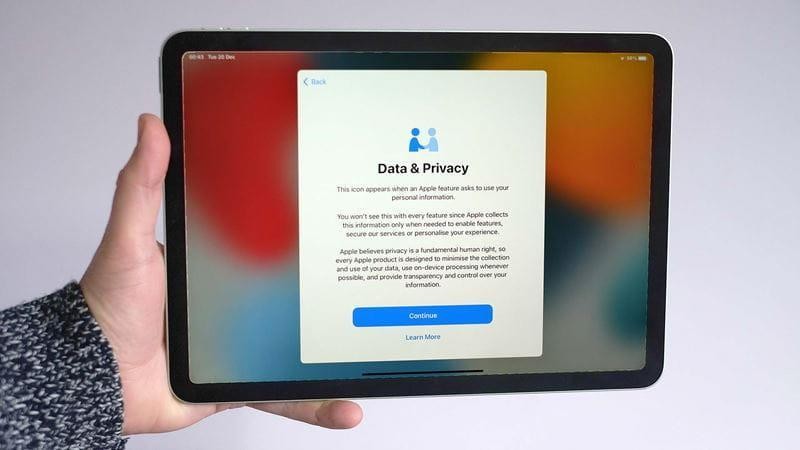
With iPad-based learning systems, student and faculty interactions take place within a controlled, institution-managed setup. Identity, access, and data flows are governed consistently, rather than varying across multiple tools and platforms.
This results in:
More predictable data structures across academic workflows
Consistent enforcement of access policies
Reduced dependency on aggregating logs and data from multiple systems
For IT teams, this simplifies monitoring and issue resolution.
For compliance teams, it reduces the effort required to prepare and validate reports.
The system becomes easier to understand and easier to trust.
Proven Impact: Real-World Results
At institutions such as KMCH and Yenepoya, the shift to a more structured environment reduced the number of inconsistencies that needed to be managed.
With fewer fragmented systems, data was easier to interpret and reconcile.
With more consistent workflows, access and usage patterns became more predictable.
This led to:
Faster identification and resolution of issues
Reduced effort in compliance reporting
Greater confidence in system behaviour during audits
The improvements were not driven by additional controls, but by reducing complexity within the system.
Self-Assessment for CTOs
A practical evaluation of system readiness includes questions such as:
How quickly can a data issue be traced to its source?
Are access controls consistent across platforms?
Does security visibility depend on consolidating information from multiple tools?
How much effort is required to prepare for compliance reviews?
The answers to these questions often reflect the level of structural control within the environment.
Distinctive Positioning—Why iPlanet Education?
Many approaches to security focus on adding layers—more tools, more monitoring, more controls.
iPlanet Education’s approach is to reduce the number of variables that need to be managed.
By structuring the learning environment and standardising user interactions, the system becomes more predictable, easier to govern, and less dependent on coordination across multiple platforms.
This results in:
Lower operational complexity
Improved visibility and control
Reduced effort in maintaining compliance
The objective is not to increase capability, but to improve reliability of execution.
ROI and Business Case
Operational improvements are reflected in:
Reduced time spent correlating data across systems
Faster response to security and access-related issues
Lower overhead in managing compliance processes
These outcomes are achieved by simplifying how the system operates, rather than expanding its footprint.
Call to Action—Unlock Continuous Security and Compliance
As digital environments continue to expand, the key question for CTOs becomes one of control:
Is the system fully understood and manageable under all conditions, or does it require coordination across multiple layers to function reliably?
A structured assessment can help identify where complexity is introducing risk, and where simplification can improve both security and compliance outcomes.